
Orchestras to Orchestras: The Prepared Piano Guide
Jan 27, 2026
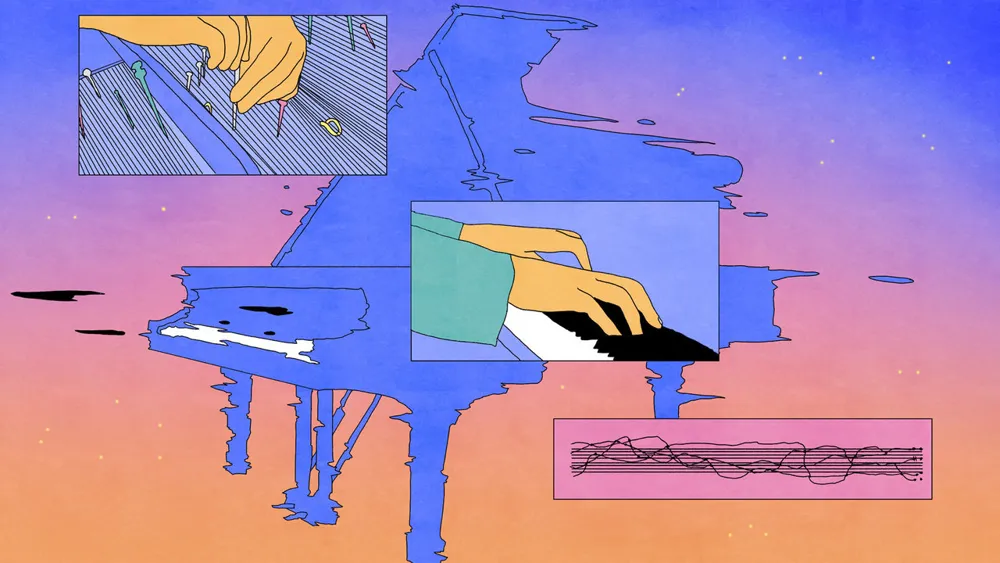
## Genetic Map (Origins and Sound DNA) The prepared piano, as an avant-garde breakthrough, traces its origins back to the experimental landscape of the 1930s, primarily championed by composer John Cage. Born out of a desire to push musical boundaries, Cage's manipulation of traditional piano elements laid the groundwork for a new sonic territory where conventional melodies met unconventional textures. The prepared piano's birth took place in a rapidly modernizing world, where the rigid confines of classical music were beginning to fray under the pressures of innovation and creativity. This pivot can be seen as a reflection of the socio-cultural landscape of the time, which craved new forms of expression amid the global tumult of war and industrial progression. In terms of sound, the prepared piano transforms traditional timbres into an expansive palette of auditory experiences. Consider the sharp *ping* of metal objects striking the strings, the muted *thud* created by rubber erasers, or the rumbles of deep resonances brought forth by heavier objects like wooden blocks. Each of these alterations allows the piano to evoke a broader spectrum of emotions, from eerie whispers to thunderous roars, ultimately redefining what a piano can *say*.
## Evolution Tree (Style Development & Fusion) Since Cage's pioneering efforts, the prepared piano has evolved through various movements and styles, intertwining with different musical eras. In the late 20th century, luminaries like George Crumb furthered this sonic experiment with works such as "Music for a Summer Evening" (1974), which features the prepared piano in dialogue with orchestral forces. The album cover, depicting an abstract representation of sound waves, showcases how the prepared piano interacts within larger orchestral compositions, making it an integral component of new musical dialogues. The fusion of prepared piano techniques with diverse genres continues to flourish today. Contemporary composers, particularly in experimental and electronic circuits, have explored the intriguing territory of marrying prepared piano sounds with electronic music, jazz, and even avant-garde pop. Musicians like Hauschka and Kodiak interacting with these elements showcase how the prepared piano serves as a nexus for genres, creating an innovative blend that attracts a multi-genre audience.
## Starter Pack (Listening Essentials) To truly appreciate the expressive capabilities of the prepared piano, here are three must-hear tracks: 1. **John Cage - Bacchanale (1944)**: A quintessential piece showcasing Cage's initial foray into the prepared piano, highlighting its unique soundscape and timbral variations. 2. **George Crumb - Music for a Summer Evening (1974)**: This work brilliantly integrates the prepared piano into orchestral frameworks, enriching the listening experience. 3. **Hauschka - Ferndorf (2011)**: Modern interpretations of prepared piano, where Hauschka incorporates electronic elements and improvisation, bridging old and new worlds. Additionally, a noteworthy yet often underrated artist is **Eve Beglarian**, whose compositions notably featuring the prepared piano, contribute profoundly to contemporary classical music's evolution, pushing the boundaries of sound and performance.
## Conclusion The prepared piano is not merely a technique but a transformative approach that challenges traditional notions of orchestral music. As audiences grow in their appreciation for these innovative soundscapes—augmented by the accessibility of social media and streaming platforms—the genre and its proponents continue to reshape the cultural fabric of music today. For those intrigued by this cross-pollination of sound and tradition, attending performances or exploring recommended works can provide a doorway to experiencing the captivating world of the prepared piano.
#cultural impact
#musical innovation
#avant-garde music
#prepared piano
#john cage


© 2025 Music Voyage.