
AACM's Impact on New American Music
Mar 25, 2026
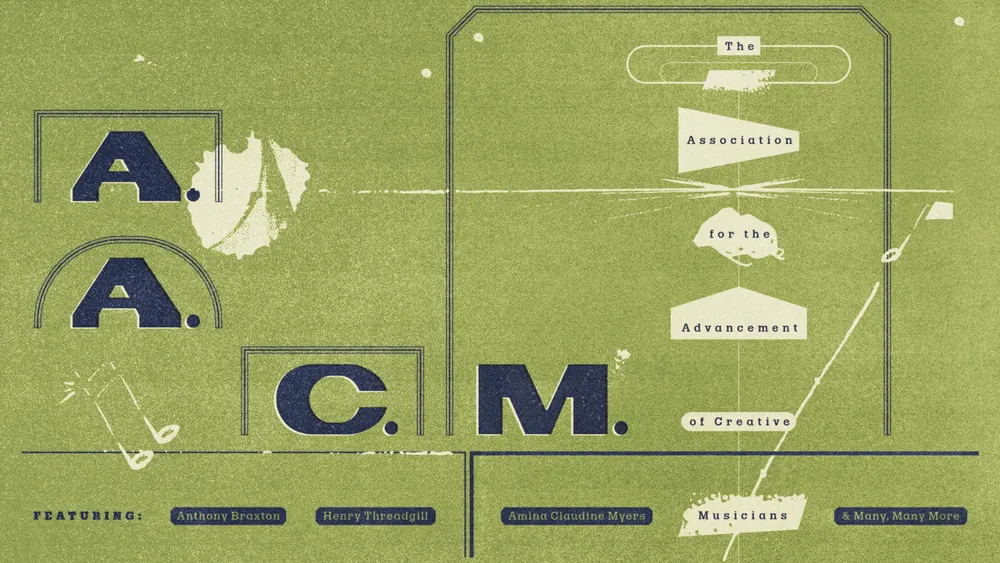
## In Their Own Words: How the AACM Shaped New American Music
The Association for the Advancement of Creative Musicians (AACM) has stood as a beacon of innovation and artistic expression since its founding in 1965 in Chicago. Emerging from the vibrant environment of the South Side during a time of social upheaval and cultural awakening in America, the AACM sought to create a platform for African American musicians who were often marginalized within the traditional jazz scene. The AACM's socio-cultural roots are deeply intertwined with the civil rights movement, reflecting a commitment to empowerment through creative music-making.
Characterized by its eclectic sound palette, the AACM nurtured diverse genres that traversed the frameworks of jazz, avant-garde, and beyond. Musicians employed complex polyrhythms (the simultaneous use of contrasting rhythms), spontaneous improvisation, and non-traditional instrumentation. This innovative approach led to a sound that could oscillate from the vibrant, skittering interactions of percussion to the deep, resonating textures of extended saxophone techniques, reminiscent of a wild symphony of urban life.
### Evolution Tree (Style Development & Fusion) As the AACM evolved throughout the 1970s and beyond, it became a hallmark of creativity, influencing key milestones in modern music. Iconic albums such as Henry Threadgill's "Too Much Sugar for a Dime" (1970) and Anthony Braxton's "For Alto" (1969) illustrate the AACM's groundbreaking contributions to the jazz and avant-garde landscapes.
In the contemporary music scene, the AACM's legacy continues to flourish as its innovative sounds influence genres like hip-hop, electronic music, and even pop. Artists like Kamasi Washington and Thundercat weave elements of AACM-style improvisation and complex structures into their work, showcasing an ongoing dialogue between past and present musical expressions. The current fusion trends reveal a remarkable blending of styles, breathing new life into long-established sonic traditions.
### Starter Pack (Listening Essentials) To better understand the AACM's impact, here are three must-hear tracks that encapsulate its ethos: 1. **"Air Raid" by Henry Threadgill (1980)** - A powerful piece that showcases Threadgill's unique compositional style, combining structured elements with the essence of spontaneous interplay. 2. **"Composition No. 96" by Anthony Braxton (1977)** - A quintessential representation of Braxton's avant-garde approach, pushing boundaries with unusual time signatures and harmonic structures. 3. **"Ghosts" by Roscoe Mitchell (1966)** - An instrumental exploration of sound that embodies the AACM's quest for new creative languages. Additionally, meet **Joseph Jarman**, an often underrated figure who, along with Mitchell and Braxton, was pivotal in the early development of the AACM's sound. Jarman's contributions remain integral to understanding the depth and breadth of the AACM's influence on modern music dates back to improvisation's roots.
In conclusion, the complex history and contributions of the AACM are fundamental in shaping the landscape of new American music. As expressed through the words of Henry Threadgill, who stated, "There was no AACM school; everyone was a part of it; it was the school," the AACM remains a collective of creativity where each artist contributes to an ongoing and evolving tradition.
#american music
#jazz
#cultural influence
#innovation
#aacm



© 2025 Music Voyage.